The official emblems and symbols of the Yukon represent the natural beauty of the territory and the history and culture of its people.
Coat of arms
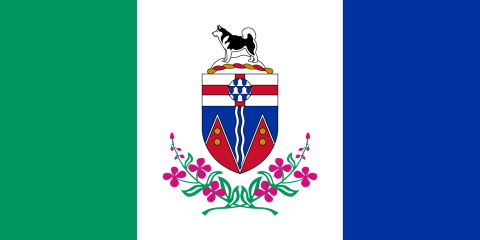
The Yukon coat of arms is a red, blue, gold and white shield surmounted by a malamute standing on a mound of snow. Wavy vertical white and blue stripes represent the Yukon River and the gold-bearing creeks of the Klondike. Red spire-like forms represent the territory's mountains and the gold circles within symbolize mineral resources. At the top of the shield is a cross of St. George in recognition of the early English explorers and a "roundel in vair" as a symbol of the fur trade.
The Yukon's coat of arms was commissioned by the federal Department of Indian Affairs and Northern Development and designed by well-known heraldry expert Alan Beddoes in the early 1950s. It was approved officially by Queen Elizabeth II in 1956.

Fireweed
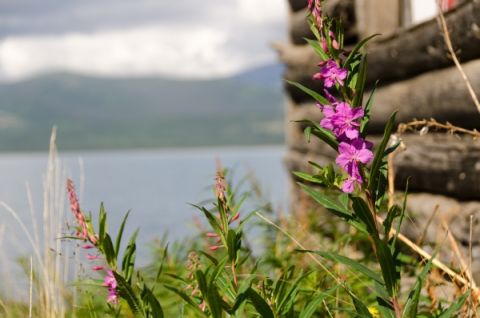
Fireweed (Epilobium angustifolium) was chosen as the Yukon's floral emblem in 1957. It's a hardy plant and grows along Yukon roadsides, river bars and clearings from mid-July to September. Its blooms are a bright magenta, making it one of the most attractive plants in the North. Fireweed is one of the 1st plants to appear after a forest fire.
Find out more about Yukon flowers.
Lazulite
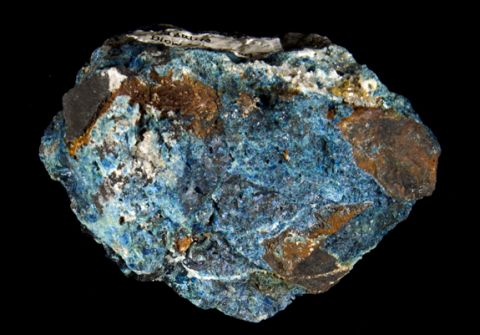
Lazulite is an azure-blue semi-precious gemstone that became Yukon's official gemstone in 1976. It's the only semi-precious gemstone found in any quantity in the territory. Lazulite is a rare and beautiful phosphorous-based mineral. Its monetary value is based on its beauty and scarcity.
As a cut stone it is relatively soft and can be scratched with a knife. Well-formed crystals of the gemstone occur in only a few places in the world. In the Yukon, lazulite is found in the layered sedimentary rock of the Blow River area, 32 kilometres south of the Beaufort Sea. The colour and crystalline qualities of Yukon's lazulite are among the finest in the world.
Raven
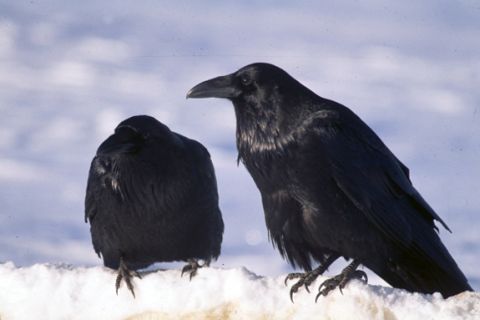
The raven was adopted as the Yukon's official bird in 1985 and can be seen throughout the territory. The raven is a significant figure in several Yukon First Nations cultures and is the subject of many stories passed from generation to generation in the territory. Ravens are very intelligent and can mimic sounds from their environment. They're opportunistic feeders, feasting on everything from carrion to groceries left in the back of pick-up trucks.
Find out more about common Yukon birds.
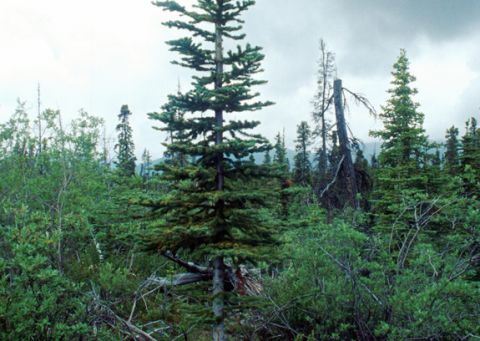
Sub-alpine fir
The sub-alpine fir (Abies lasiocarpa) was selected as the Yukon’s official tree in 2001. The sub-alpine fir can range from 6 to 20 metres tall and is found in the regions south of Dawson City and east of Haines Junction. It usually grows at higher elevations. The tree's short, stiff branches slope downward, which allow it to withstand heavy loads of snow and ice in the high country.
Sub-alpine fir needles produce a lemony-tasting tea, which is a traditional First Nations cold remedy rich in vitamin C. Sap drawn from the blisters on its bark has also been used by First Nations people as a traditional medicine for lung ailments.
Yukon flag
The Yukon flag has 3 vertical panels: a green panel, a central panel of white and a blue panel. The Yukon coat of arms appears on the central panel framed by 2 stems of fireweed. The green symbolizes the forests, white signifies snow and the blue represents Yukon's rivers and lakes.
The Yukon flag was the winning submission to a territory-wide design competition sponsored by the Whitehorse branch of the Royal Canadian Legion as part of Canada's 1967 centennial year celebrations. Lynn Lambert of Destruction Bay submitted several designs in hopes of winning the contest. One of his designs was officially accepted as the territorial flag in 1968 out of 137 submissions.
Yukon tartan
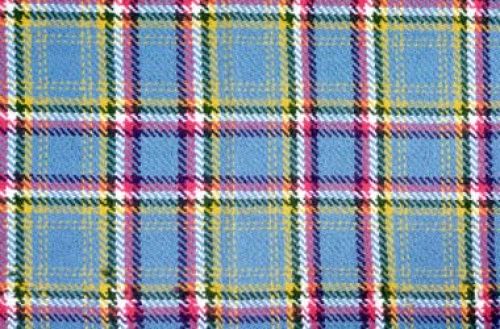
The Yukon tartan is composed of green, dark blue, magenta, yellow and white stripes in varying widths on a light blue background. The crystalline blue background represents Yukon's sky and the green symbolizes the territory's forests. White symbolizes snow and yellow represents Yukon's gold. Magenta is the colour of fireweed, Yukon's official flower and dark blue represents the mountains.
The Yukon tartan was designed by Janet Couture of Watson Lake in 1965 and was first proposed as the official territorial tartan during the 1967 Canadian centennial celebrations. The tartan was later accepted by the King of Arms of Her Majesty's New Registry House in Edinburgh in October 1984. The Yukon Tartan Act was passed in 1984.