

Name
- Common name: Grizzly Bear
- Scientific name: Ursus arctos
- Order: Carnivora
- Family: Ursidae
- Indigenous names for this species may be available through the Yukon Native Language Centre.
Also known as
Brown Bear
Viewing opportunities
- The Dempster Highway, the Atlin Road, the Haines Road or the Alaska Highway near Kluane Lake are the most likely places for roadside viewing of Grizzly Bears.
- River travellers in the early spring and late fall have the highest chances of seeing a Grizzly Bear.
- Hiking in the alpine habitat where the vegetation is sparse and long distance views are common allows you to see Grizzly Bears from a safe distance. Kluane National Park and Ni’iinlii Njik Territorial Park are good areas for bear viewing.
- Conduct viewing responsibly and respectfully.
Description
- Generally brown coloured fur but can range from near black to silver-blonde.
- Lighter tips of the long guard hairs gives the bear a “grizzled” appearance.
- Side profile of the face has an upturned nose or “disk” shape.
- Characteristic hump on the shoulders.
Fast Facts
- Length: 1 to 2.8 metres
- Weight: 155 kilograms (male), 95 kilograms (female)
- Lifespan: 20 to 30 years
- Predators: Humans
- Habitat: Boreal Forest, Mountain Alpine, Arctic Tundra
Conservation status
- Yukon: S3 (Vulnerable)
- Global: G4 (Apparently Secure)
Yukon population estimate
6,000 to 7,000.
Behaviour
The life of a Grizzly Bear revolves around an intensive search for the most nutrient-rich foods it can find. It will spend winter in a den before emerging in spring to search for food. Yukon Grizzly Bears have a very low rate of reproduction. They breed for the first time around their 8th year and reproduce every 3 to 4 years.
Food
Roots, berries, grasses, sedges, horsetails, moose, caribou and small mammals.
Distribution

Sights and sounds
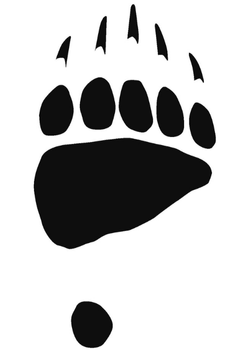
Grizzly bear track, front: 12.4 x 13.9 cm.
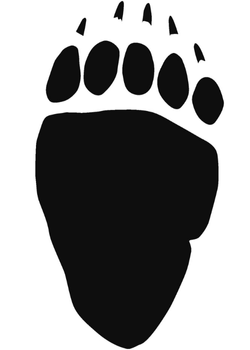
Grizzly Bear track, hind: 21.6 x 13.2 cm.
 Tracks in the mud.
 Grizzly Bear pile: 15.5 x 3.8 cm.
Bears and people
- Grizzly Bears have long been an important part of the cultures of Indigenous Peoples of the Yukon through dances, ceremonies, art and stories.
- Bears are a major consideration for all Yukoners when going outdoors, staying at a cabin or camping for the weekend. Carry bear spray even close to the city, as bears are found in a variety of habitats.
- Keep all garbage and food waste in a secure way or bears will be attracted by the possibility of a free meal.
Management plan
Read the final conservation plan for grizzly bears (Ursus arctos) in Yukon.
Read supporting information for the plan.
Reports
- Results of the 2020 grizzly bear and black bear hunter experience and effort survey (2025)
- DNA capture-recapture population survey of black and grizzly bears in the Beaver River watershed, Yukon (2022)
- Review of Grizzly Bear monitoring and mortality management in the Yukon (2022)
- Grizzly Bear population in the Southern Lakes region 2012–13: Final report on population analysis (2017)
- Yukon North Slope Grizzly Bear population estimation and demographic analysis (2016)