

This is a joint news release between the Gwich’in Tribal Council, the Government of Yukon, Parks Canada and the First Nation of Na-Cho Nyäk Dun.
Today, Grand Chief Frederick Blake Jr. of the Gwich’in Tribal Council, Chief Dawna Hope of the First Nation of Na-Cho Nyäk Dun, the Honourable Nils Clarke, Minister of the Environment for the Yukon, and the Honourable Steven Guilbeault, Minister of Canadian Identity and Culture and Minister responsible for Official Languages, announce that the proposed national park in the Teetł’it Gwinjik (Peel River) Watershed has been deemed feasible and a Collaboration Accord has been signed to advance the initiative into the next phase of the establishment process – negotiating an establishment agreement.
This milestone marks a significant step forward in the collaboration between the parties to protect one of the most ecologically and culturally significant landscapes in Canada. If established, the proposed national park would be jointly managed by the Gwich’in Tribal Council, the First Nation of Na-Cho Nyäk Dun and Parks Canada. It would only be established with the full support of all parties.
Based on the results of the feasibility assessment, the parties concluded that the creation of a new national park in this area is practical and desirable. The feasibility assessment included engagement with Gwich’in leadership and participants, Na-Cho Nyäk Dun leadership and Citizens, stakeholders and other interested parties, as well as careful consideration of the spiritual, cultural, environmental and socio-economic values of the region.
Indigenous-led conservation is foundational to any vision for a proposed national park in this area. This initiative presents a unique opportunity to uphold Indigenous self-determination, protect the integrity of the Teetł’it Gwinjik (Peel River) Watershed and support the continuation of cultural practices on the land. The parties are committed to working together toward a new national park that reflects shared values, protects biodiversity and honours Indigenous knowledge, culture and stewardship.
Our people have lived with and cared for Teetł’it Gwinjik since time immemorial. This area is not only rich in wildlife and pristine waters, but it is also central to our culture, spirituality and way of life. The feasibility work we undertook together has confirmed what Gwich’in have always known: this land is special and must be protected for future generations. We look forward to working with our partners to negotiate an establishment agreement, enshrined in Indigenous-led conservation principles, that reflects our values, honours our rights and safeguards the Peel River watershed forever.
On behalf of the First Nation of Na-Cho Nyäk Dun I want to extend my thanks to the governments of the Gwich'in Tribal Council, Canada and Yukon for the good will you have brought to completing the Feasibility Study for the proposed National Park in the Teetl'it Gwinjik Watershed. This engagement has been a great example of how intergovernmental collaboration should work in the era of the First Nation of Na-Cho Nyäk Dun Final Agreement and the Gwich'in Comprehensive Land Claim. We have re-affirmed the sanctity of our treaties and the integrity of the Peel River Watershed Regional Land Use Plan. We look forward to continuing our good work in the negotiation of an Establishment Agreement that maintains the Park in a pristine natural condition and promotes Indigenous led conservation.
Nature is an immense part of Canada’s identity and Yukon is home to some of the most iconic species and stunning landscape in the country. Our government is committed to protecting more nature than ever before – including by creating at least 10 new national parks and marine conservation areas, as well as 15 new urban parks across the country. The work undertaken in collaboration with Indigenous Nations and territorial partners to create a new national park in the Teetł’it Gwinjik (Peel River) Watershed is a meaningful step forward both conservation and reconciliation.
Our future is tied to the health of lands and waters. The confirmation that a national park in the Teetł’it Gwinjik Watershed is feasible and desirable reflects the strength of working in partnership toward conservation and cultural respect. This process shows how Indigenous-led stewardship and environmental protection go hand in hand. The Government of Yukon remains committed to supporting this collaborative effort as it moves forward.
-
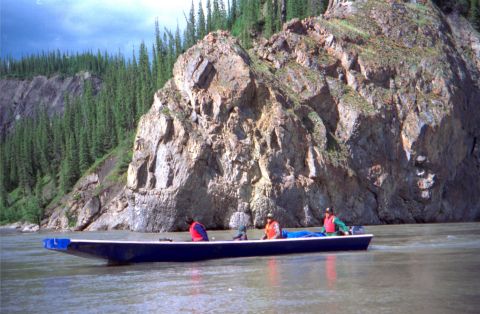
The Teetł’it Gwinjik (Peel River) Watershed is one of largest intact ecosystems in Canada, home to diverse wildlife and rich cultural heritage.
-
The Collaboration Accord outlines a shared vision and principles for advancing the proposed national park.
-
The next phase will involve formal negotiations to give life to the vision of joint stewardship and management, to ensure the important natural and cultural features of this area are maintained for the benefit of the Gwich'in Tribal Council, the First Nation of Na-Cho Nyäk Dun and all Canadians.
About the area
The Teetł’it Gwinjik (Peel River) Watershed is in northeast Yukon, near the Yukon-Northwest Territories border. It is a unique northern area with stunning landscapes of forests, free-flowing rivers and wildlife. It is located within the Traditional Territories of the Gwich’in and Na-Cho Nyäk Dun and the Gwich’in Settlement Region. The Teetł’it Gwinjik (Peel River) Watershed is central to their traditions, cultures and ways of life. Part of this watershed is being considered for the creation of a proposed new national park.
Study area
The study area is located in the northeast part of the Teetł’it Gwinjik (Peel River) Watershed. It is almost 3,000 square kilometres in size – that’s about half the size of Prince Edward Island. This area features river canyons, scattered lakes and riparian forests. These wetland and forest habitats are important for caribou, fish and other animals. It is also an area of great cultural and spiritual value to the Gwich’in and Na-Cho Nyäk Dun.
History of this initiative
The possibility of protecting portions of the Peel Watershed as a national park was first raised by the Gwich’in Tribal Council during implementation of the Peel Watershed Regional Land Use Plan. The plan identifies the study area as a Special Management Area, earmarking it for permanent protection and joint management. A national park designation was identified as a possible method of implementing these goals and commitments.
Feasibility assessment
On April 19, 2024, the Gwich’in Tribal Council, the First Nation of Na-Cho Nyäk Dun, Parks Canada and the Government of Yukon signed a Collaboration Accord. The 2024 Collaboration Accord outlined commitments for the parties to conduct a feasibility assessment for the proposed national park.
The feasibility assessment included careful consideration of spiritual, cultural, environmental and socio-economic values in this area, as well as consultation with Gwich’in leadership and participants, Na-Cho Nyäk Dun leadership and Citizens, stakeholders and the public. Engagement and consultation occurred throughout the feasibility assessment process and provided an opportunity for all those interested to provide their input on key considerations in establishing a potential national park in the Teetł’it Gwinjik (Peel River) Watershed.
This process highlighted the spiritual, cultural, environmental and socio-economic importance of the Teetł’it Gwinjik (Peel River) Watershed and demonstrated its special place in the hearts of the Gwich’in and Na-Cho Nyäk Dun communities, as well as many stakeholders and members of the public. The outcomes of the feasibility assessment are summarized in the feasibility assessment report.
Next Steps
The next stage of the process for creating a national park will be for the parties to negotiate the establishment agreement. Each of the parties must approve and sign the final agreement in order for a new national park to be established; a new national park would only be created with the full support of all the parties.
Laura Seeley
Cabinet Communications
867-332-7627
[email protected]
Mara De La Rosa
Communications, Environment
867-456-5565
[email protected]
Hermine Landry
Press Secretary, Office of the Minister of Environment and Climate Change
873-455-3714
[email protected]
Media Relations
Parks Canada
855-862-1812
[email protected]
Sarah Frey
Communications Contractor, First Nation of Na-Cho Nyäk Dun
867-689-8514
[email protected]